Field Notes

Field Notes

Observations in the present moment

Birdy moment

In this house of wonderful tall windows, it can feel like living inside a snowglobe, only with cats and dust in place of the white flecks, and instead of strange eyes looking in, we householders do the looking, my eyes, the cats eyes, spying outward.

Folding laundry, I notice the cats at the window, two furry statues, tails flicking, intense and excited. When I pause with a ball of socks in my hand to see what they see, ah, yes, fluttering wings and flung water.

At the edges of the pond, all along our shallow recirculating stream, and beneath the two-foot high waterfall, a mixed flock of Dark-eyed juncos and Chestnut-backed chickadees are bathing, drinking, landing and taking off, the surrounding redwood limbs and huckleberry bushes, dancing, as the little flyers perch, shaking themselves dry.

Crouching down beside the cats, we watch the show—downy heads dipping into shallow pools, feathers flicking pearls of water, new arrivals touching beaks to greet each other or lining up on mossy rocks before diving in.

We’ve been invited to a bird party!

Suddenly one much smaller bird—coppery with a patch of crimson—arcs up into the bare, weeping cherry tree.

Who are you?

As that question passes through my mind, I already know. Rufous hummingbird. The earliest I think I’ve ever seen one come through. A gorgeous male, his head scanning side to side, flashing his irridescent gorget.

Suddenly he flies to the window, hovering inches from the cats’ faces, only a bit of glass between us, watching us, as if we could be dazzling, too.

Ruth Stone

Ruth Stone

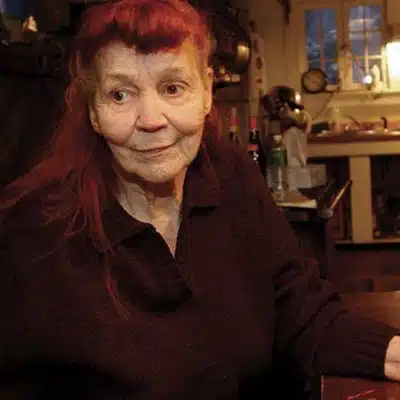
Scanning a list of women poets this morning, I pause at Ruth Stone. I heard her read her work decades ago. In an intimate theater—just a few rows of seats circling a worn, wooden stage—she was the last poet to read. The one we’d all come to hear, though I had no idea who she was.

After the promising new poets and the staid, published professor, there she was, with her long hair pulled up at the sides, in her loose shirt and baggy trousers. A grandmother, speaking of loss and nature.

I shook her small hand afterward, a gentle grip, the bones of her fingers barely beneath her cool skin. I was so young. Her poems introduced a wildness, rooted in the ordinary that I’d never experienced—all mixed with hurt, longing, persistence, and humor.

She was real, down-to-earth, quirky, more likely to sit on a mossy stump than on some literary pedestal.

She did things with language, strange and beautiful. She made you feel you could do that, too.

Her poems were at once simple and sublime, like her name. Her whole name just two syllables, but full of meaning. Ruth, yes, I knew that old story. Stone, how much metaphor that word has borne.

As I remember that evening, I realize how long it’s been since I read Ruth’s poems. “Ruth?” you ask, as If I knew her. You don’t have to know a writer to know a writer.

Hmmmm, what poems did she read that night? Too long ago. All that comes is, Something about apples?

I pull all my Ruth Stone books from a shelf, looking for whatever work would have existed when I was in my 20s. I land on:

Green Apples In August we carried the old horsehair mattress To the back porch And slept with our children in a row. The wind came up the mountain into the orchard Telling me something: Saying something urgent. I was happy. The green apples fell on the sloping roof And rattled down. The wind was shaking me all night long; Shaking me in my sleep Like a definition of love, Saying, this is the moment, Here, now.

I’m stunned, moved, grateful. Only now do I realize how much my reading of Ruth’s work earlier in my life has shaped how my poet’s eyes look into the world and how I come to the blank page to lay down my own pathway of words.

I read some online bios. How her second husband, Walter Stone, hung himself on the back of a door in the room they’d rented while the family was on sabbatical in London.

How did I not know this? I feel even closer to her.

Suddenly a single mother, lost in grief, she found herself saying to herself, “The bird has died,” which she later explained to others as, “The bird in me has died.” That realization marked the start of a painful journey to build a new world without Walter, and ultimately breathe new life into that bird.

One bio mentions how she died at 96 and was buried near the raspberry bushes behind her modest farmhouse in Vermont.

All day I think of those raspberry bushes where she’s buried, going through the seasons. The naked snowy cold, the lush seedy heat. I want to eat those berries, let Ruth feed my body the way she’s fed my mind and spirit.

Making a salad for supper, I see a pint of raspberries in the ‘fridge. I rinse a handful, one-by-one. Scatter them over the bowls of lettuce, peppers, cukes, and slivers of radish, nestling each delicate, bumpy, red body among pumpkin seeds.

Colorful, simple. I am happy.

Popping one sweet-tart raspberry in my mouth, I say, as Ruth did all those years ago:
“…this is the moment,
Here, now.”

Invisible

Sometimes it seems I could be the only person on the planet. Stepping out on the deck past dusk, in that threshhold between daylight and deep darkness, there’s no other human face.

I can imagine all the houses filled with their people, but only imagine.

Far away from this ridgetop, in the low places, hidden and damp, hundreds of tree frogs sing about love, and longing for the next rain.

The goat star, Capella, flickers red, green, blue—these days often mistaken for a drone. I know better.

I see you, luminous star-bird, hovering curious as a hummingbird above the tip of a redwood.

So still, yet chimes tinkle and clatter from another part of the yard. One brown leaf, caught on a dead spruce limb, swings back and forth, a little pendulum out of time.

Who sees me? Who knows I am still here?

If I walk into the woods right now, and fall into the duff, would I make a sound?

Orb weavers

Orb weavers

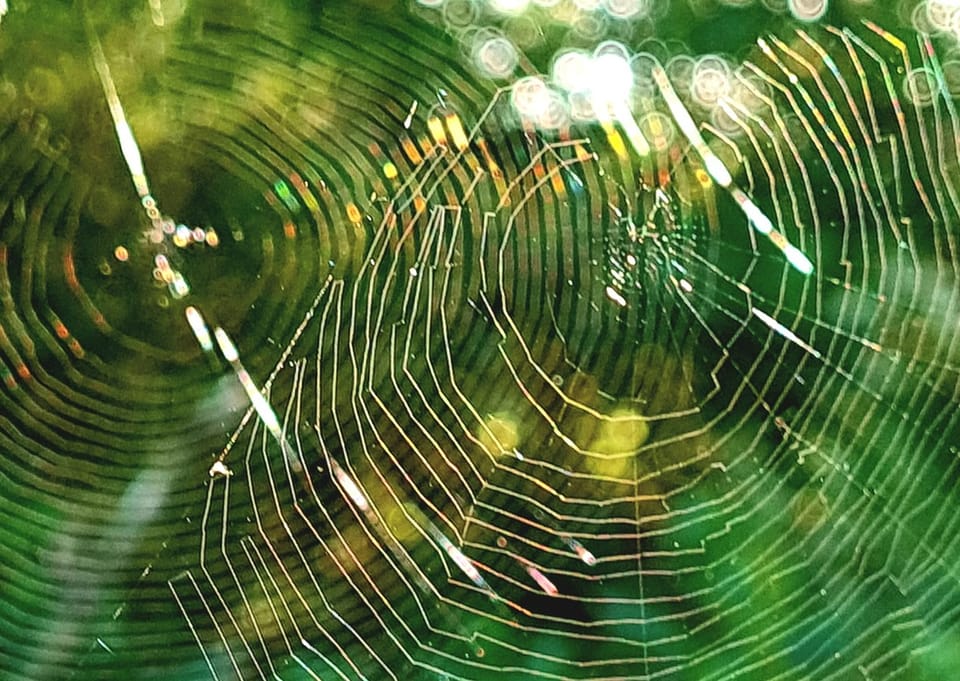
A week ago, a young man speaking of orb weavers in a deep ditch, hundreds of them, golden-yellow, their webs in clusters, a massive aggregation. He’d travelled a long way in that ditch, walls rising twice his height, before stopping, the spectacle of spiders and strung silk, part awe, part revulsion.

It was years earlier, just a teenager in that ditch, though he could have been a gazelle, vulnerable and fierce. I felt his longing to get away, the risk, the unnamed danger, his curiosity taking him far beyond his fear.

I know orb weavers, I thought as he spoke, my mind lighting up with iridescent threads strung everywhere, big bulbous spiders with long spindly legs suspended in air, webs reaching from handrail high into the tops of rainforest trees. In darkness, I’m walking to an elevated, thatched cabin above a flooding Zambezi River in Zambia. I’m careful where I place my hands, shimmers from the rushing water illuminating the filaments, a gossamer map, breathing and pulsing all around me.

His story and my story are speaking to each other.

This is how a moment opens. And now you, reading these words are in it, too. You, and all your stories.

We’re part of a virtual gathering, and he’s off screen, pure voice, so it’s easier to imagine the 15-year-kid amazed and aghast before the wall of webs and spider bodies big as silver dollars, the blur of legs working fast.

He didn’t need to go any farther. By then, he’d already passed through so much.

A line from poet Muriel Ruykeyser enters the mental conversation, “The universe is made of stories, not atoms.”

I’ve always loved that simple line, and it’s truer than a poetic idea. We are all bits of humming energy, this storyteller, the spiders, the screen, the river still streaming through me. Everything is story.

Who hasn’t looked at the smeared light of a galaxy caught in a photo, a spiral web of stars simultaneously small and vast, wondering what it’s seen after so long surging away into space? What stories could those old stars tell, indeed are telling in the absence of words?

The story keeps coming back to curiosity and danger, the inner drive to explore “the culverts of life,” his words, which I understand literally and metaphorically. The storyteller speaks his truth and, Surprise, mine, too.

This moment is a tiny architecture, little galaxy, necessary web, I think, in that silent space after his voice stops.

Looking out the window, light and shadows are moving in half-green ferns. A hummingbird flutters at the still-blooming fuschia. A low thermal rustles the dried-brown grasses—or maybe just a hidden wave of hungry Juncos?

In my notebook I write, “What spins, keeps on spinning.”

All the bears

All the bears

Early morning, my husband half-waking out of sleep to tell me, “All the bears are dead.”

I’m a bear-lover, so this stops me as I’m about to rise. His eyes are closed. I’m sitting up, one cat still sleeping at my hip. Wondering if I mis-heard, I ask, “What did you say about bears?”

“They’re all dead,” he confirms, “the bears.”

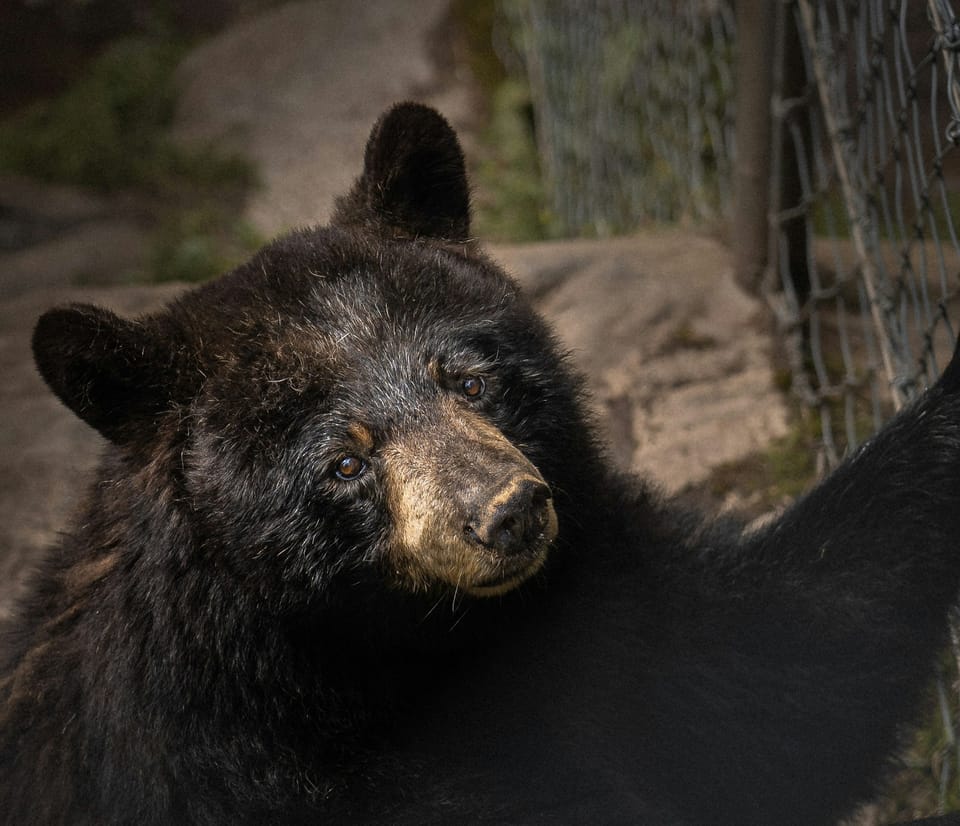
I close my eyes and remember bears. Mostly black bears, but also a Cinnamon bear in the Canadian Rockies outside of Jasper, grizzlies hunting ground squirrels quite successfully near Denali, the two massive brown bears fishing upstream from us in the Sitka rain.

There was also the baby bear, decades ago, who ran across a road one Pennsylvania night, disappearing into a culvert. When we stopped to get a glimpse of the little guy, he scuttled under our SUV and climbed into the wheel well. On our way home from a community fund-raising event—my husband in a tuxedo and I in the ubiquitous little, black dress—we were, nevertheless, bear-lovers to the bone.

I immediately jumped out, kneeling by the wheel, cooing and reaching for the baby, who was bleating, loudly. His fur was thick and coarse, though as my fingers touched deeper, ah, such downy-soft underfur. My wildlife-biologist husband scanned the road’s wooded edge for the mother, before dropping down with me, sliding his arm up higher in the truck, and grabbing bear baby by the scruff.

He walked the baby back across the road and into the woods so his mother could safely find him. The baby popped back up, still bleating, and ran to my husband twice, before giving us one last look, his eyes shiny as flecks of foil, then wandering deeper into the forest.

I barely slept that night, wondering if mother bear had found her renegade cub. The next morning I walked to the spot where we’d left him, and followed the pushed-down grasses and weeds, ducking under fallen maples, squeezing between hemlocks, until I lost his path. I sat on a damp log for a long time, listening for that bleating. Only birdsong and a distant, beeping garbage truck.

Bears often amble through the redwoods below our home, sometimes climbing up onto our deck to lick seeds from the birdfeeders. Such surprisingly long and tactile tongues. Funny to look out your livingroom window and see a bear calmly looking back, chewing.

A year and a half ago, I witnessed a wounded mama bear splayed on the ground near our home with her yearling, sounds I’ve never heard shared between bears, low grunty-mews. I don’t speak bear, but I felt the good-bys and the grief. Mama later limped slowly into the redwoods with her young one, but only the yearling ever returned.

I bear so many memories of bears, hurdling through my mind. Even the sign my husband nailed near a side door flashes by, “An old bear lives here.” Indeed, he still does.

“Who killed all the bears?” I ask, opening my eyes, checking to see if bear-guy is asleep, awake, or lost in that liminal space between.

“You killed the bears,” he answers, motionless. “You killed all four of them, with that big black rifle.”

“Why would I ever kill bears?”

“They were attacking me, and you were protecting me.”

I’m dumbfounded, taking in what was clearly a dream, but also, part of our life in this final hospice time.

Four falls in the last week—one bad enough to bloody his forehead, his legs giving out suddenly, his body like a matchstick doll collapsing under his own weight.

He wants to walk on his legs, feel that sense of agency and independence, perhaps a vestige of strength. But. Even aided by the dreaded walker, his legs can’t be trusted. All week I’ve pleaded to let me roll him in the wheelchair. Told him I’m his private Uber. He smiles every time, though I know he feels defeated.

Death may come as one final, irretrievable loss. Dying happens in loss after loss, as if the body doesn’t give up all at once, but part by part.

“I only want to protect you.”

How many times have I said that now? “I only want to protect you from more hurt and pain.”

Adjusting the covers up to his shoulders, kissing him on that battered forehead, I slip out of bed. Just as the cat and I head to the kitchen, my husband’s soft, sleepy voice offers, “You got them all.”

Birthday

Today I become the age that my mother was when she died.

Logically, I know it means nothing. We two, such different people with wildly dissimilar life trajectories, emotional landscapes, traumas, joys, animal bodies.

She lived 42 1/2 days after her birthday before her lungs gave out.

First, the lung without the massive tumor collapsed, which I imagined being like a circus tent folding down on itself. Pigeons perched along the roof line tossed fluttering into the air, elephants waiting outside to enter shifting back and forth on their leathery-pillar legs, a clown car spining round and round out of control (I’ve always found clowns scary)—all in the confusion of limp fabric and ruined architecture lifeless on the ground.

How will I step through my next 42 1/2 days?

It is okay to have small goals, which may be way bigger than you think. Okay to say, “Today, I will focus simply on being.”

Despair

Despair is a kind of fire in the skin, that pink sheath stretched over the cheekbones, the red-rim at eye’s edge.

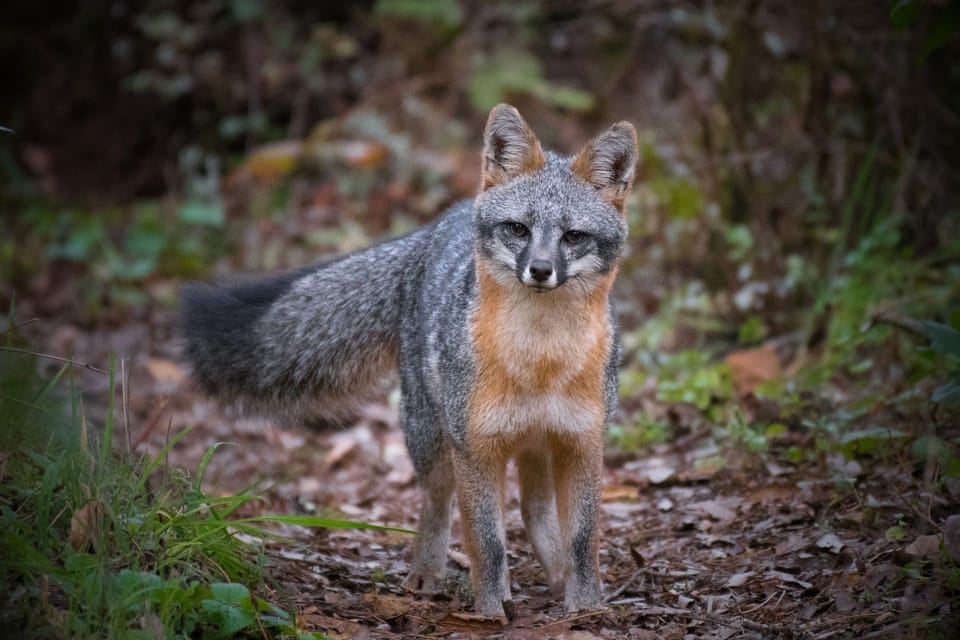
Last night my husband, refusing my help, the wheelchair, my protective pleas. I could see him wobbly and working too hard to get out of his recliner. His voice angry as a fox, cornered, that yapping, raspy bark.

Do you know what it’s like to know what is going to happen?

You don’t need to be psychic. Some knowing is pure bone, the marrow part fat, part wisdom.

Going down, his head battered glass that held (thank you, universe) before hitting the wooden frame, the metal track of the sliding door.

The fall was fast, and yet, to witness it, a slow-motion rupture in time and sanity. Helpless is an insufficient word.

Who is more foolish? He who chooses ego over care, or she who thinks she can save anyone?

I won’t tell you now crazy-hard it was to get him up and into bed, only that you keep finding a way, and giving up is not an option, literally.

After tending to the bloody patch opened on his forehead, leaving him to sleep, I went out into the garden room, the cats following, before I closed the door. They watched me sobbing, deep and huffing. Oddly, they were purring. Thank you, thank you, my mind whispered.

When I saw bits of blood on my fingertips, I honesty didn’t know if it was his or mine, or who’s pain I was grieving.

Invisible trail

Invisible trail

Who are we when we write?

I’m in the last session of a brief writer’s workshop, a handful of now-familiar faces before me on a screen. They can’t see my fluffy slippers or the precarious towers of books I moved from desk to floor or the haggard impact of caregiver sleep deprivation (the right Zoom settings, overgrown bangs shading my eyeglasses, not too much light, and, voilà, presentable!).

Who are we when we write? We flip off our cameras to scribble or type out a response.

Eyes. The first word that comes to me is eyes. Then, paying attention.

Living in a mystery. Curiosity. Alone. Vulnerable. Green. Wings and tails. Moments, simultaneously ordinary and magical.

Where is the earliest story to answer this question? I wonder.

I’m 5-ish, more than a year past the fire that took my two sisters, leaving me with a mother so broken she tried, though failed, to kill herself with sleeping pills while I was napping. My father grieved by working hard, stoic and bewildered. I didn’t have those fancy words then, but I felt his world and hers. Visceral and confusing.

Not the middle girl any more. The only child now. No one to talk to, about what happened, what is still happening.

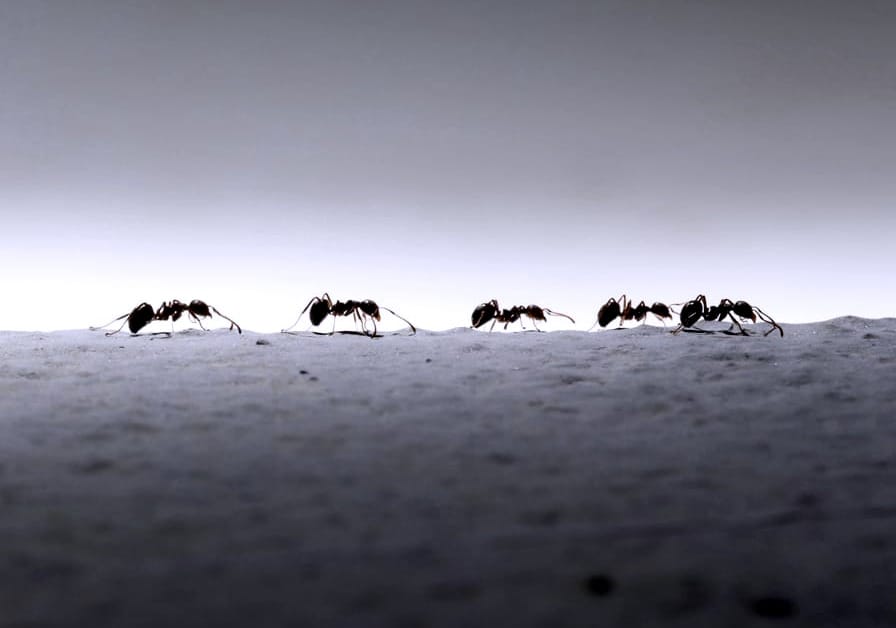
I’m in the backyard, squatting on a sidewalk. Feet bare, I feel the roughness, also the warmth. I’m looking at ants, no, watching them, like a show.

They move fast, fast, fast on their hair-like legs. Mostly they follow each other in a crooked path. If one falls out of line, or wanders off, she comes back to the ants, trotting along their trail.

There’s a ragged crack in the pavement, green growing out of it, and the ants climb through it slow and clumsy. I can see it’s hard for them getting through it, as if lost in a jungle, a tiny-to-me, but huge-to-them jungle. One by one, they make it through, all in a curving line on the other side.

A group of ants pulls apart a big, dead dragonfly. They’re strong. Like Mighty Mouse, I think.

I follow one ant carrying a long, see-through wing all by herself. Girl? Boy? I decide she’s a she. Another hauls a leaf, many times her size, the leaf toppling sideways several times, making her stop, circle it, then get it back up on her ant-shoulders, running and running.

I’m not thinking about time, about how long I’ve been looking. I’m wondering about ants. Watching as hundreds of black bodies not much bigger than grains of rice travel that path, until there are just a few.

In the garden, there’s a little hole next to a wilting flower, among orange petals in the dirt, and the ants go in. They disappear.

Where are they when I can’t see them? What are they doing in that hidden place?

When I think all the ants are gone, one ant pops up on the sidewalk. No other ants to follow, but she finds the invisible path and scuttles along, tracing it perfectly over pavement, through the jungle, heading toward the orange petals.

I sense that even though she seems lost and alone, she really isn’t. She’s following the invisible trail to her others. I don’t know why, but I feel happy and safe.

After writing this memory, I’m surprised at how it came to me into this moment, into this writing-reflection exercise, without effort or invitation. I experienced it, lush with detail, felt in body as much as in the mind. Yes, that was the conversation I needed then, spoken through the natural world, wild and sensory. Still that way now.

Who am I when I write?

I am that last ant who senses the invisible trail that’s always leading to the hidden place, ordinary and magical, always keeping us connected to our others, whether we see them or not. Writing is how I make the trail visible to myself and to anyone who wants to come along with me.

Pillow

My OwlMan, so depressed all day and almost no appetite at dinner.

Preparing the bed for him, I see the outline of his head in his pillow, and realize, Someday that is all that will remain—the space where he used to be.

Endings

There is such weight in endings.

One year dissolves into another. Did I do enough in the year now gone? What will I expect of myself in the year ahead?

Mostly, though, you never know a thing is the last thing in real time, only later.

What if this is his last supper? What if this is his last pair of slippers, the last stroke along the soft back of his beloved tabby, the last reach of his hand for mine, palms together, warm, that little squeeze confirming we’re still here together?

What is the last thing he will see at the window? And can I make it be birds, wings in a blue sky, lifting up?

Wanting

Wanting. Is how we stay in this life. Wanting. Is the life force. Wanting, not out of lack, but fed by desire, intention, possibility, hope, connection, love.

Sitting at our friends’s long wooden table scented with steaming stew, facing out to the dark Pacific beyond this room where seawater can have wild, white hair and curl in on itself, there is pure peace.

Two young raccoons are looking in at the bottom of the French doors. A fire in the wood stove warms my back. A shard of lettuce on my fork looks all the world like a smiling bear, though I say nothing, because J is telling a story, and we’re all laughing.

It is miraculous to be here. How many times has my husband ('T') almost died?

So rare for either of us to feel truly relaxed these days. You can’t wait for ‘things to get better,’ but allow the ease, the peace, the tiny joys to take hold of you anyway.

Our two, dear friends likely don’t see that T is gripped by a near-constant malaise, his body hurting just sitting in a chair, that he’s having a hard time following the conversation, or how the brief shower and getting dressed wore him down so thoroughly that he almost gave up on coming here tonight.

I watch my husband be happy anyway.

Standing beside him earlier in the bathroom, his breathing labored, body weakened, I asked if he still wanted go tonight.

“I want to. Yes, I want to. I want to go be with our friends.”

So, here we are. The sweet-faced raccoons peer up at me through the glass, and I point them out to T.

I watch him smile.

On the elaborate red dinner plate, butter melts and pools in his dollop of mash potatoes, which he loves. There’s music, a playlist of crooniers and jazz, mingling with J’s storytelling. Spices drift from the kitchen. Above us, in a bedroom, a calico dozes. This house is moving through the Milky Way at 140 miles per second, but feels still, rooted, a needed pause.

Relaxed. For a little while, we are all safe, there is nothing we need to tend to, no worries, no news.

Wanting to be in this moment is all that matters, even more than having it or how it unfolds. Wanting allows being. That is my mind speaking to itself.

Hello, raccoons, do you know this, too? It’s a silent question I send to the two black and white faces. What they no doubt want are a spoon of stew and a taste of potatoes. Ah, you’d rather have than want right now, yes?

Still, the wanting keeps them at door, believing in their petite, plum-ish, raccoon hearts that anything is possible.

They see us toasting the winter solstice, and I wonder what they perceive.

Drips of light will start lengthening the feel of each day. Who doesn’t want that?

Groundlings

Adding a piece of madrone to the woodstove, I notice an ad about Alzheimer’s playing during a break in the SF Warriors game that OwlMan is watching.

A guy holds up sweet potatoes and a woman, presumably his aging mother, calls them "groundlings.”

I like that, groundlings. Sounds like a kind of animal, a vole or shrew. She sees them as inhabitants of the earth, beings, not just tuberous roots for the table.

Her son corrects her. I know it’s a commercial. All sales are to solve problems, so her word must be fixed.

But I think, What if she is right?

Back in the kitchen, making mashed potatoes for my husband, who is terminally ill but still knows food names. I hold the potato, feeling it’s skin. We call it skin! Oh, and I rinse away two green eyes. Yes, we call them eyes!

Hello, groundling. I see you. Soon you will inhabit this animated dust of us.

Composting

To be a caregiver, moments into days into weeks into years, changes the scale of life. My world becomes smaller, disconnected from the great out there.

Tiny, invisible, lost. But then you realize, what is small is deep, delicate, dense with meaning.

Last night, slipping strawberry tops and carrot tips with their tiny whiskers into the compost bin, along with scrapings from my husband's plate as his need for food diminishes, I think of the worms.

I just signed up for a service that picks up our food scraps, keeping them out of the landfill. Too much wildlife around us to compost without risking foxes and skunks eating rot. So our scraps will go to a worm farm to convert what we don't consume into compost that will grow new food.

It was sprinkling when the woman from the worm farm delivered my weekly compost bucket. She was kind. Our faces and hair, glistening. On a day that felt hard, such a blessing.

Now I think of the worms eating my offerings. All of us small, unseen, doing our work of turning one thing into another.